
For strategy gamers who rely on strategic planning and decisive action from afar, a precise, comfortable, and powerful mouse is undoubtedly your most important weapon on the virtual battlefield. Whether it’s the lightning-fast micromanagement of a real-time strategy (RTS) game or the thoughtful macro planning of a 4X game, the right mouse can significantly enhance your gaming experience and competitive level.
After comprehensively analyzing the latest market reviews and player feedback from 2025, we’ve carefully selected the ten best mice for strategy gaming, ranging from flagship models to budget-friendly options to meet the needs of every player.
Flagship choice: built for core gamers #
1. Razer Naga V2 Pro - The king of modularity, a versatile strategic tool #
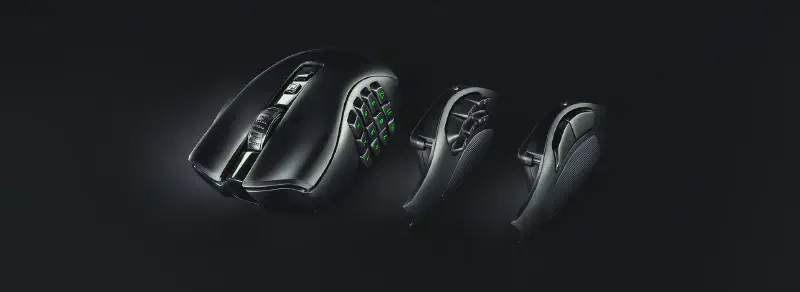
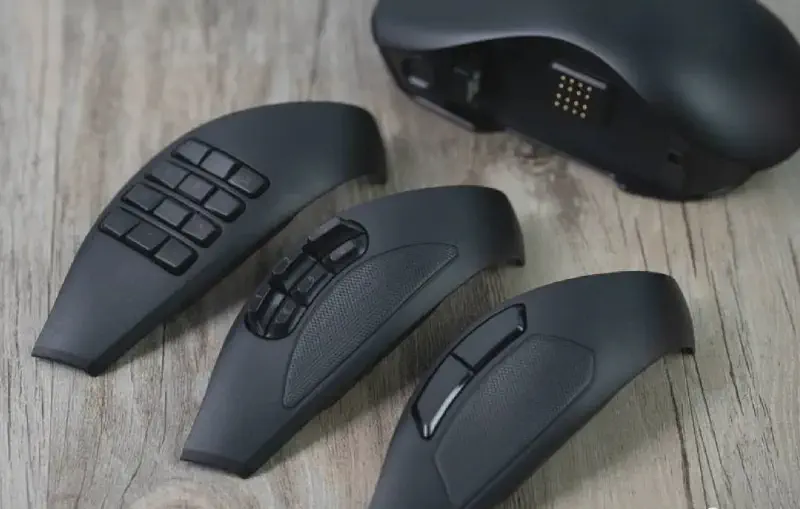
Recommended: With its signature interchangeable side panel (available with 2, 6, or 12 button layouts), the Naga V2 Pro perfectly adapts to the complex command demands of any strategy game. Bind a vast array of unit formations, building commands, or skill shortcuts to the side buttons for one-click victory. Its HyperScroll Pro wheel offers multiple scrolling modes, making it easy to quickly navigate the tech tree or precisely select units.
Suitable for gamers: Deep MMO and RTS players, as well as hardcore strategy gamers who require extensive custom macros.
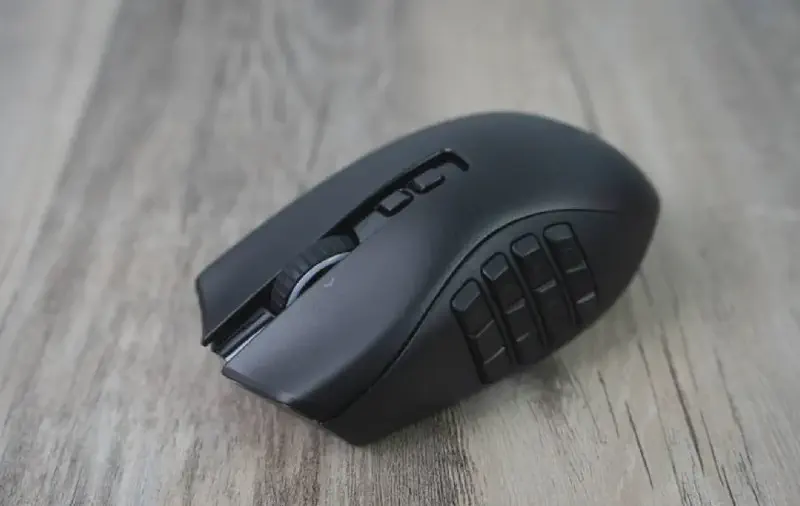
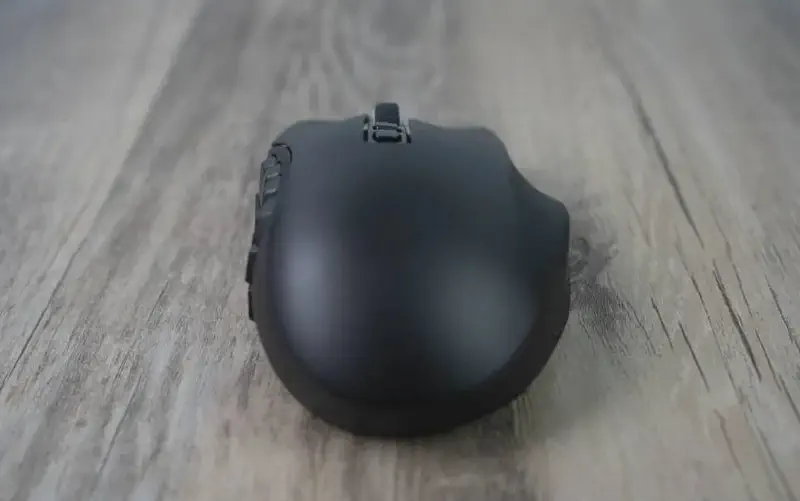
The tail of the mouse looks bare, but it actually houses the Razer logo, which is translucent and hard to spot when it’s not powered on. It only lights up when powered on, creating the same effect as the Basilisk V2.
The mouse’s scroll wheel and DPI button area are glossy-finished. The four-way scroll wheel is light-transmissive, has a large scale, and relatively low damping. The DPI button feels soft, but there is a noticeable click when you press the bottom, providing a strong sense of confirmation.

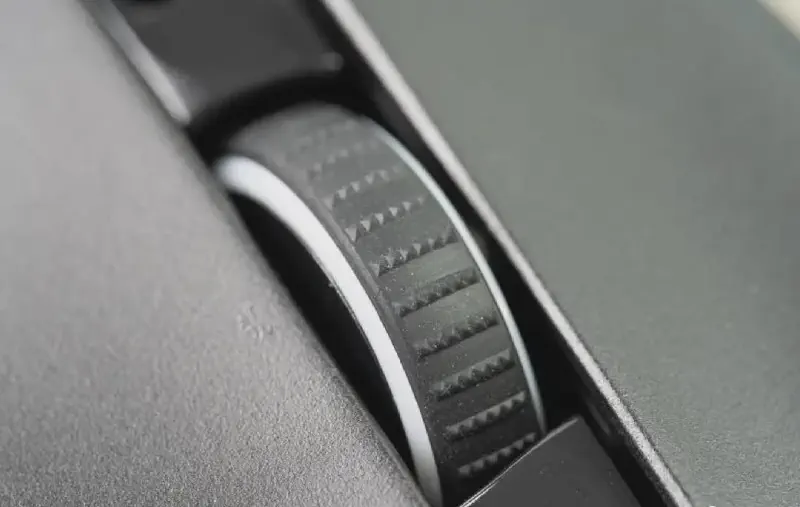

The chassis design of the Razer Naga Pro is quite complex. I believe that Razer fans are familiar with the PROFILE button, which is the switch button for the semi-loaded memory configuration.

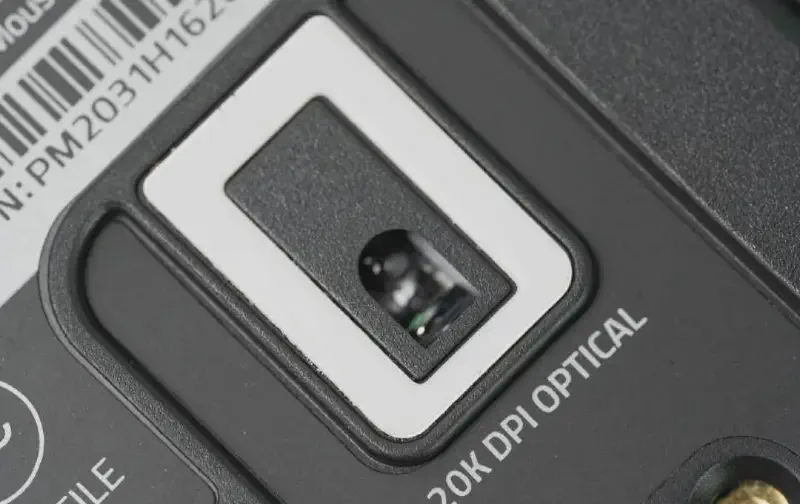

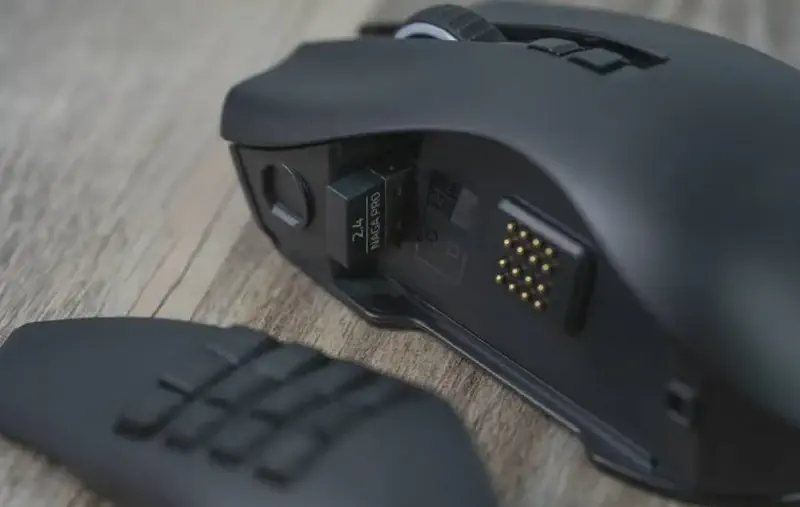
2-button/6-button/12-button side panel, which one do you prefer? The shapes of the three side panels are exactly the same, which helps users get used to the feel of each side panel. The only difference is the number of buttons.
The main feature of the Razer Naga Pro is still its wireless performance. In order to avoid electromagnetic interference caused by certain chassis , Razer thoughtfully provides a USB HUB+ extension cable to bring the 2.4Ghz receiver closer to the mouse, which can greatly reduce interference.
Obviously, the more buttons a side panel has, the heavier it is. However, the maximum weight doesn’t exceed 117 grams, which is satisfactory given the built-in battery and my personal mouse usage habits. Speaking of battery capacity, the Razer Naga Pro doesn’t provide specific data, but official data suggests a maximum battery life of approximately 100 hours in 2.4GHz mode and approximately 150 hours in Bluetooth mode, which is more than satisfactory.
I have almost no complaints about it, whether in terms of feel or performance configuration. As for the service life, I don’t think it is a problem. As someone who has been using the DeathAdder since the earliest days, I feel that Razer products can still be reassuring in terms of quality control. The Razer Naga Pro uses Razer’s most advanced technology to date: HYPERSPEED wireless technology, FOCUS+ 20K DPI optical sensor and exclusive infrared micro switches, which are its core competitiveness. Disadvantages: I think the Micro USB charging port is still a bit outdated. Nowadays, most digital devices on everyone’s hands are Type-C, so it is quite inconvenient to take out the Micro USB cable when charging. If you are interested in the Razer Naga Pro, you might as well buy the RGB base version. Not only can it be used as a USB extender, but charging is also more convenient.
2. Logitech G502 X Plus - Ergonomic Classic, Fully Upgraded #

Recommended: The G502 series has long been a highly regarded all-purpose mouse. The G502 X Plus inherits the classic comfortable grip with a lighter design and all-new LIGHTFORCE optical-mechanical switches. Its unique “sniper button” design instantly reduces the DPI when precision is needed, making it ideal for precise unit selection in games like Total War. The infinite scroll wheel is also a great tool for navigating long lists.
Suitable for gamers: RTS and turn-based strategy players who seek the ultimate in comfort and a limited number of programmable buttons.
Compared to the G502, the G502 X Plus has smoothed out some of its sharp corners and rounded some decorative lines, but from any angle, it’s unmistakably a G502. Its button layout is identical to the G502. Besides the left, center (scroll wheel), and right buttons, there’s a scroll wheel mode switch and a custom button behind the scroll wheel, two custom buttons to the left of the left button, two buttons above the thumbstick, and a DPI switch in front of the thumbstick. When held, the G502 X Plus’s contact points are identical to the G502, resulting in an identical feel.
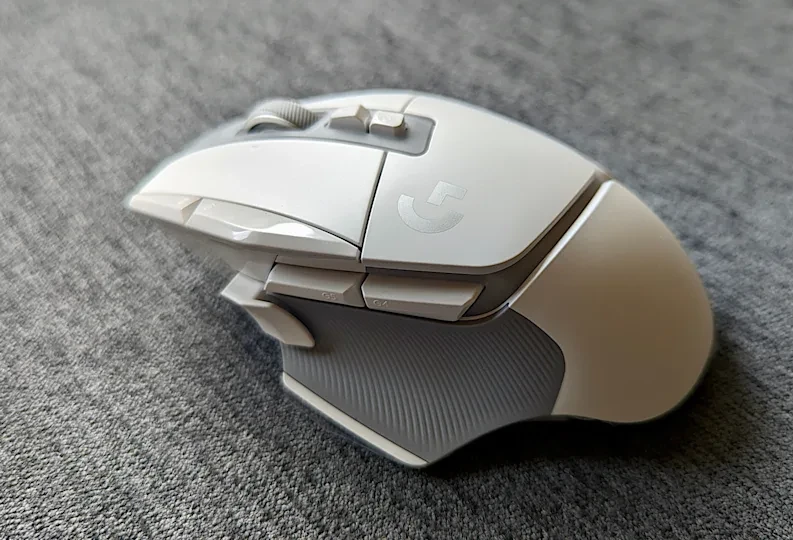
Like all members of the G502 family, the G502 X has a round cover on the bottom that can be opened. If you have a Powerplay wireless charging pad, it is compatible; otherwise, it provides a space under the cover to store the wireless receiver.
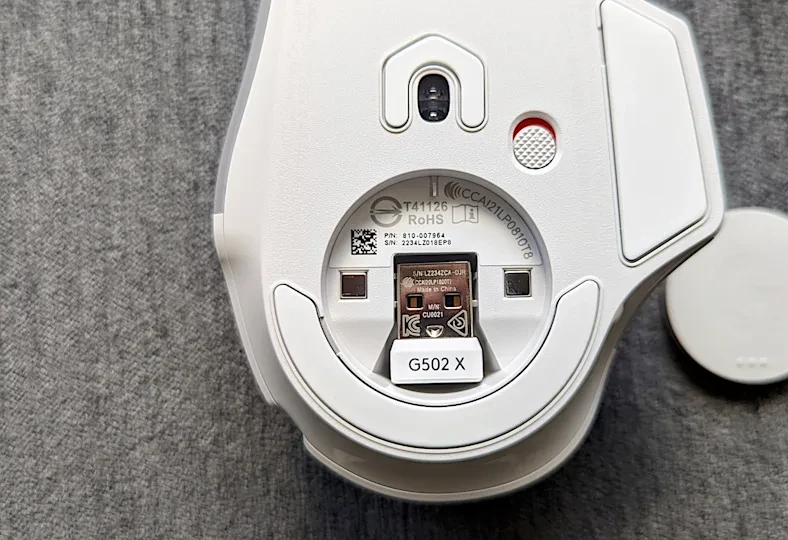
While not immediately apparent, the G502 X boasts numerous changes compared to the G502. The most significant of these changes is undoubtedly the new “Lightforce” microswitch. Unlike previous microswitches, which utilize metal contact to trigger a button click, Lightforce retains the tactile feel and click response of a metal switch, but the triggering signal is optical. When you press a key, a gate within the switch blocks a laser beam, generating a click signal. This system is immune to contact failure caused by metal fatigue or oxidation, theoretically resulting in more reliable and durable use and reducing the likelihood of double-clicks. The G502 X’s buttons feel just like a standard gaming mouse, though Logitech’s claim of “reduced latency” is unnoticeable.
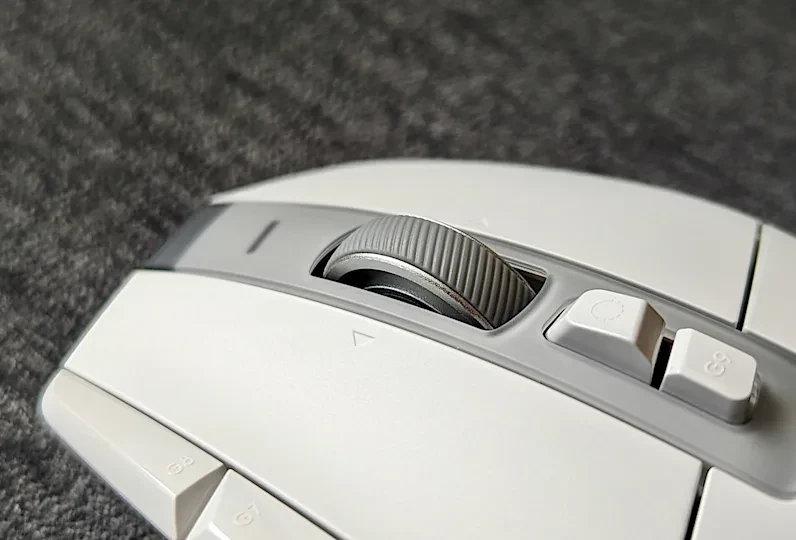
The third change is the DPI quick-switch button on the thumbstick. This button, a key feature of the original G502, allows you to quickly switch between two preset DPI settings. For example, you could use a higher DPI to speed up head movements in a shooter, while holding down the button to switch to a lower DPI for increased accuracy when sniping requires precision.
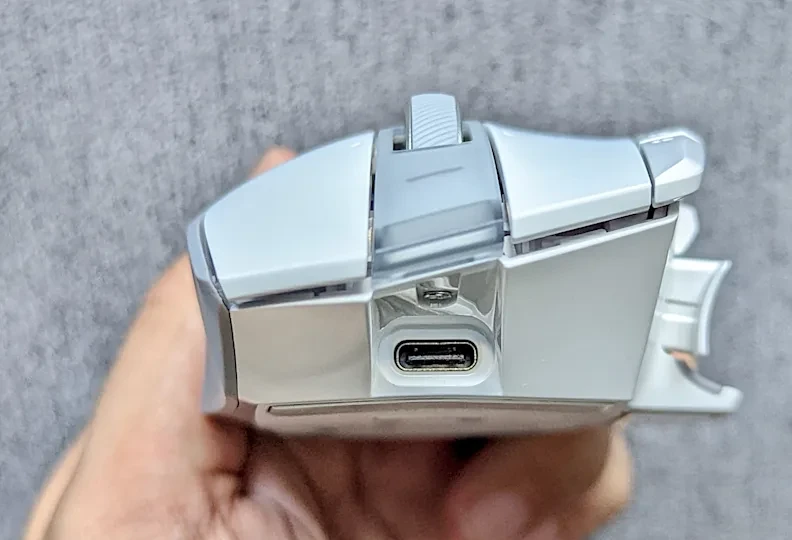
Finally, there’s the one change that can only be described as “finally”: USB-C. After all these years, Logitech finally figured out how to switch the gaming mouse’s charging port to a standard USB-C cable. And without that weird two-pronged retainer, any standard USB-C cable should work. As usual, the G502 X includes a USB-C to USB-A adapter, allowing you to use the charging cable as an extension cable for the wireless receiver, moving it from behind the computer, where interference and obstruction are more common, to the desk in front of the mouse.
The G502 X still ships with Logitech’s gaming software, G Hub. Anyone who’s purchased a Logitech gaming product in recent years will undoubtedly be familiar with it. After some issues in its early years, the modern G Hub has become quite user-friendly, aside from being a bit bulky due to its extensive functionality (the Windows version takes up 365MB of space). As always, I still feel that Logitech has hidden too many features within the “Settings” icon in the upper right corner of the interface. For example, “Idle Lighting” should be grouped with Lightsync, right? Don’t forget to check it out to see if you’ve missed any settings.
Key assignments are a culmination of Logitech’s extensive experience, encompassing keyboard keys, keyboard combinations, common system functions, media controls, and more. Macros can also be recorded, and the G502 X features G-Shift, which expands the total number of keys. Furthermore, Logitech has begun adding custom settings for specific software, such as Discord audio/microphone controls and OBS settings.
Logitech’s official website claims the G502 X Plus has approximately 37 hours of continuous use with the RGB lighting on. My own calculations, based on a full day of use, suggest a recharge every 5 to 7 days, roughly in line with the official estimate. However, this will obviously depend significantly on factors such as RGB lighting usage and return rate. The G502 X Lightspeed, which lacks RGB lighting, is officially rated for 140 hours of continuous use. Regardless of the wireless mouse model, it can be used as a wired mouse while charging when plugged in.
3. Corsair Scimitar Elite Wireless - The Side Button Master for MMO/RTS #
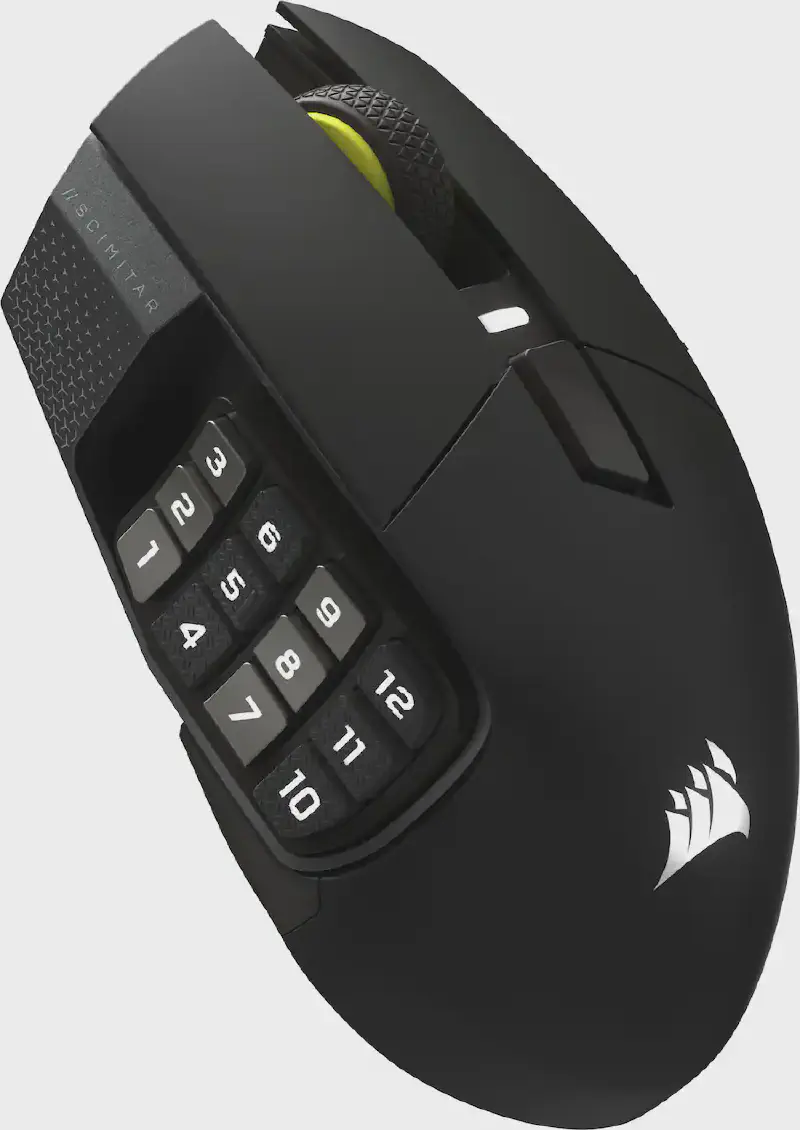
Recommended: This mouse is designed for gamers who need a large button-heavy setup. Its 12 side mechanical buttons slide 8mm back and forth to perfectly align with your thumb, providing unparalleled custom comfort. Each button is carefully designed for easy identification and triggering, making it ideal for executing complex sequential commands.
Suitable for gamers: Similar to the Naga V2 Pro, this mouse is primarily aimed at MMO and RTS players who require a large number of shortcut keys and particularly value the personalized experience of adjustable side button placement.
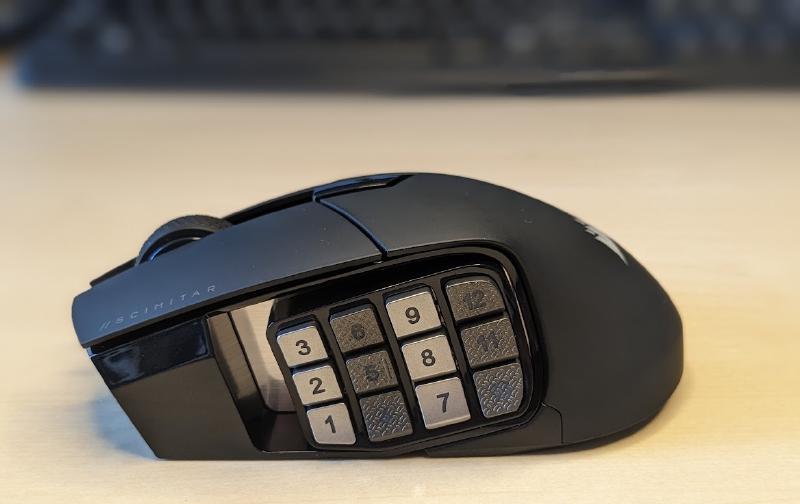
The new iteration of the Corsair Scimitar Elite Wireless mouse builds on the design philosophy of the original and Pro versions. Designed to be the ultimate mouse for MOBA and MMO gamers, it boasts 16 programmable buttons (one less than the previous generation), while retaining the familiar 12-button layout on the left panel.
The main new features include wireless connectivity via SlipStream or Bluetooth, as well as a new sensor , the Corsair MarksMan 26000 dpi. In terms of design, it maintains very similar lines to the previous model, although we will take a closer look at all the differences and test it thoroughly to see how it works.
The new sensor offers higher accuracy than previous Scimitars, specifically the 26,000 DPI Marksman sensor. With a maximum speed of 650 IPS and a maximum polling rate of 2,000 Hz , it’s already the same sensor we already see on the Corsair M65 RGB Ultra Wireless . It offers three to five adjustable DPI profiles, ranging from 400 to 9,000, identified by an LED indicator below the scroll wheel. These profiles can also be customized through iCUE.
The Corsair Scimitar Elite Wireless is a high-performance gaming mouse that, in terms of its intended use, is designed for MOBA/MMO gamers and comes equipped with keyboard shortcuts.
It has a wealth of programmable buttons (16 to be exact) that let you quickly activate spells, call up potions and equipment, and open menus, making your reactions even faster. Plus, it’s definitely one of the few mice we’ve tested that’s well-suited for macro and remapping enthusiasts.
While it’s also well-suited for content creation, such as video editing and music production, these buttons are useful for assigning keyboard shortcuts, effects, and tools.
If I had to nitpick one thing about this mouse, it would be the placement of the 12 slider buttons, all of which use Omron micro switches. No matter where you push the slider, whether forward or backward, some of the buttons are a bit difficult to actuate.
Of the 12 buttons, six in total, the second and fourth columns are also textured, while the fifth button also has ridges, making them easy to identify by touch. However, their close proximity makes it difficult to avoid mistakes during extended use.
Corsair’s all-in-one software, iCUE, not only lets you remap and assign macros, hotkeys, and shortcuts to your liking, but you can also create and save sub-profiles within profiles for actions, lighting effects, and DPI adjustments.
The Corsair Scimitar Elite Wireless offers two connectivity options: Bluetooth and the Corsair Slipstream Wireless adapter. The latter offers a 1ms response time, surpassing even some wired mice, and a 2000Hz polling rate.
While the device also supports Bluetooth, using it in this mode isn’t recommended for gaming, as the performance difference is noticeable. For a gaming experience comparable to a wired mouse, the Slipstream Wireless is the best choice, guaranteeing zero lag.
It also comes with a 1.8-meter USB-A to USB-C cable so you can charge it and use it via the cable when needed.
Corsair’s latest Scimitar excels in its intended gaming targets. It delivers exceptional image quality at an affordable price, boasts a wide CPI range, and can be saved in multiple profiles. Its accuracy, playability, and ease of use make it a highly recommended model for MOBA/MMO gaming.
The details are all very nice, especially the ability to easily adjust the mouse button layout to suit your grip. However, this mouse macro layout solves a common problem: because all the buttons are so close together, even when they are arranged in rows, the textures are different, making it difficult to easily press the desired button.
High-performance recommendation: a balance of precision and comfort #
4. Razer DeathAdder V4 Pro - Pure Performance and Feel #

Recommended: The DeathAdder series, a longtime fixture in the gaming mouse market, is renowned for its exceptional ergonomics and top-tier sensor performance. The V4 Pro boasts an exceptionally lightweight design and a high 8000Hz response rate, ensuring a silky-smooth pointer experience. While limited in programmable buttons, its unparalleled comfort and precision make long gaming sessions a joy.
Suitable for gamers: RTS and 4X game purists who prioritize mouse fundamentals and seek ultimate precision and comfort.
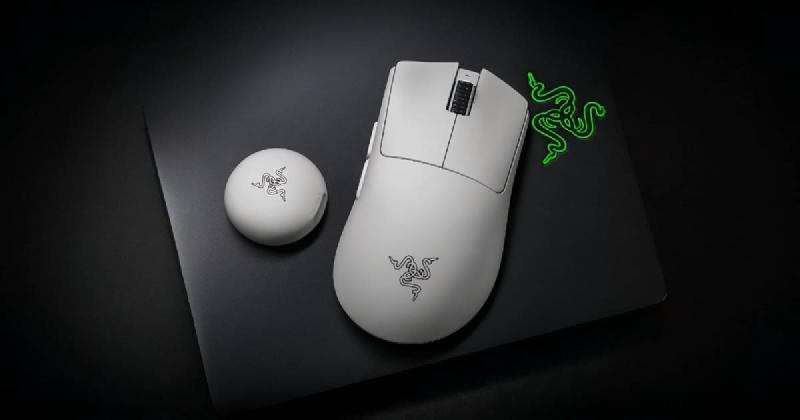
Razer has released the all-new DeathAdder V4 Pro gaming mouse, almost two years after the previous-generation DeathAdder V3 Pro. The new DeathAdder V4 Pro boasts a minimal exterior refresh and significant internal upgrades. Besides offering an ergonomic design for a better grip, it’s also lighter at just 56 grams. It also features the Razer Optical Scroll Wheel for the first time, along with Razer’s fourth-generation optical mouse switches, the Razer Focus Pro 45K optical sensor, HyperSpeed Wireless Gen 2 technology with an 8,000Hz polling rate, and an impressive 150-hour battery life, providing gamers with a more stable, responsive, and durable gaming experience. The newly designed semi-circular wireless receiver is also a favorite of mine.
The Razer DeathAdder V4 Pro launched this year weighs only 56 grams (57 grams for the white version), which is lighter than the previous generation Razer DeathAdder V3 Pro’s 63 grams. This naturally made me compare it to the Viper V3 Pro I’m currently using, because I couldn’t put it down because of its lightness. This time, the DeathAdder V4 Pro also has a lightweight design of 56 grams.
In addition to the mouse itself, the Razer DeathAdder V4 Pro product portfolio also includes a new semi-circular wireless receiver and a USB Type-A to USB Type-C cable.

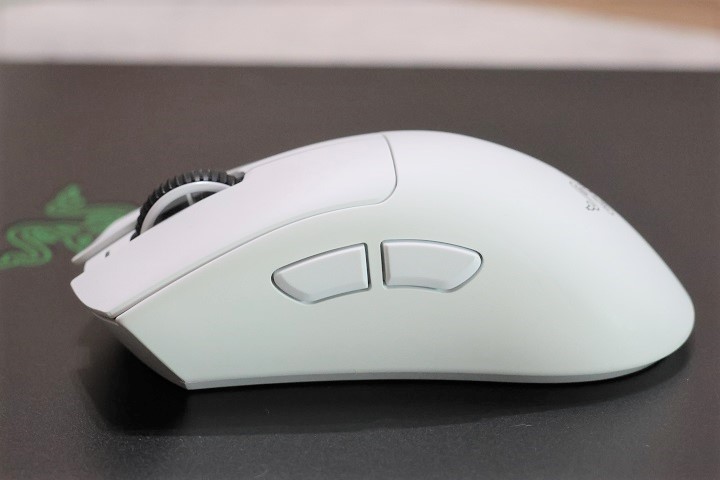
The DeathAdder V4 Pro’s design is minimally different from its predecessor, with a classic right-handed ergonomic design that makes it easy for gamers with either a grip or palm grip to use. The side buttons have been replaced with two separate ones, effectively reducing accidental clicks during intense gaming. Larger PTFE mouse feet provide a smoother gliding experience.
The appearance of the Razer DeathAdder V4 Pro is not much different from its predecessor. The most significant difference is that the side buttons have been changed to a separate design, which can effectively reduce the chance of accidental touches during intense gaming.
Using the second-generation Razer Focus Pro 45K optical sensor, it can provide a sensing capability of up to 45,000DPI resolution, a motion detection capability of 900IPS, and 85G acceleration detection.
The DeathAdder V4 Pro also debuts the Razer Optical Scroll Wheel, which improves scroll resolution and segment consistency, boasting a lifespan three times greater than traditional mechanical scroll wheels. It also addresses the issue of scroll wheel rollback reported by some users, resulting in a more pronounced sense of segmentation when scrolling.
The buttons utilize Razer’s fourth-generation optical mouse switches, also known as fourth-generation optical switches. This all-new design utilizes a light beam sensor to trigger each click, eliminating the traditional metal contacts. This results in virtually zero lag. The click response is incredibly fast, ensuring instantaneous response, whether you’re performing continuous clicks, single clicks, or rapid follow-up shots in-game.
The Razer DeathAdder V4 Pro is Razer’s first gaming mouse to feature second-generation Razer HyperSpeed Wireless technology, offering a more stable connection and lower latency than its predecessor, ensuring a click feel virtually identical to a wired mouse. It also supports a polling rate of up to 8,000Hz, making it ideal for the demanding real-time responsiveness of professional gaming. Furthermore, thanks to its newer chipset design, it boasts a more energy-efficient battery life. According to Razer, the 1,000Hz polling rate offers up to 150 hours of battery life. While 8,000Hz polling consumes more power, it still offers approximately 22 hours of battery life. In a week of actual use, with the intelligent polling rate switch enabled, the mouse normally operates at 1,000Hz, automatically switching to 8,000Hz during gaming. This lasted a full week without requiring a single charge, demonstrating its impressive battery life.
The Razer DeathAdder V4 Pro is a gaming mouse that’s meticulously crafted in design, functionality, and gaming experience. While maintaining its classic right-handed ergonomic design, it features comprehensive internal upgrades, including a lighter 56g chassis, eco-friendly construction, discrete side buttons, and enlarged PTFE mouse feet, for a superior grip and control experience.
The newly added Razer Optical Scroll Wheel solves the “rollback” issue common with previous mechanical scroll wheels, while the fourth-generation optical switches offer faster click response and a lighter feel. They’re also rated for 100 million clicks, though they also produce a noticeable click sound. Furthermore, the DeathAdder V4 Pro features second-generation HyperSpeed Wireless technology and a Focus Pro 45K sensor, supporting a polling rate of up to 8,000Hz and boasting up to 150 hours of battery life at 1,000Hz. These features enhance the DeathAdder V4 Pro’s practicality and operability.
The accessories are also impressive. The newly designed semi-circular receiver is not only attractive and stylish, but also addresses the needs of gamers for stability and signal quality. Unfortunately, it can’t be used with the previous generation. For long-time DeathAdder users, the new V4 Pro is a familiar yet practical flagship right-handed mouse. It’s also worth a try for gamers who value lightweight, high-precision, and stable performance.
5. SteelSeries Aerox 5 Wireless – A lightweight all-rounder #
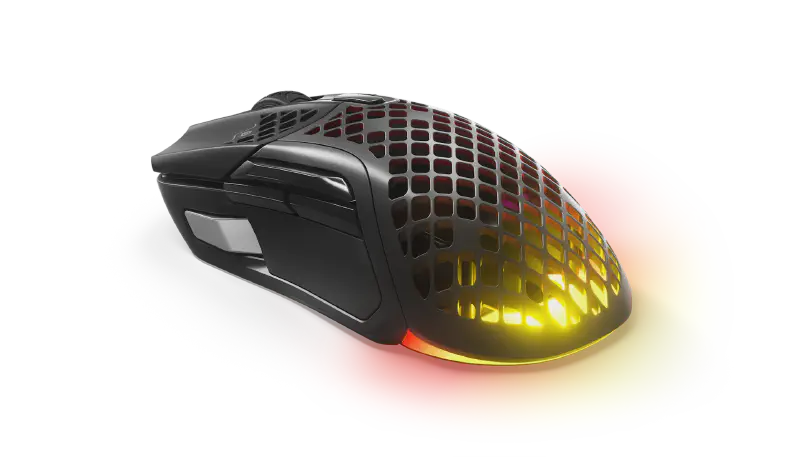
Recommended: The Aerox 5 strikes an excellent balance between lightweight and versatile. Not only does it boast a lightweight perforated shell, but it also features nine cleverly placed programmable buttons, including a unique up-and-down toggle side button perfect for assigning frequently used commands. Its water- and dust-resistant design also enhances durability.
Suitable for gamers: Strategy gamers who prefer a lightweight mouse but also require more function buttons than a traditional FPS mouse.
First, the SteelSeries Aerox 5 Wireless’s ultra-lightweight 74g design and wireless design offer the most direct benefit of a smooth, fluid mouse swing, without any sense of restraint. At 128mm long and 42mm high, the mouse is ideal for players with larger hands. The relatively flat, right-sloping curve of the mouse’s waist allows for a natural resting position for the pinky finger, providing a full and relaxed support for the palm. It doesn’t take long to get used to. I believe the palm grip is the most correct and comfortable way to hold the Aerox 5. Regarding the feel of the buttons, the TTC dust-resistant gold switches offer a crisp, firm click, making them ideal for players who prefer a strong click confirmation.
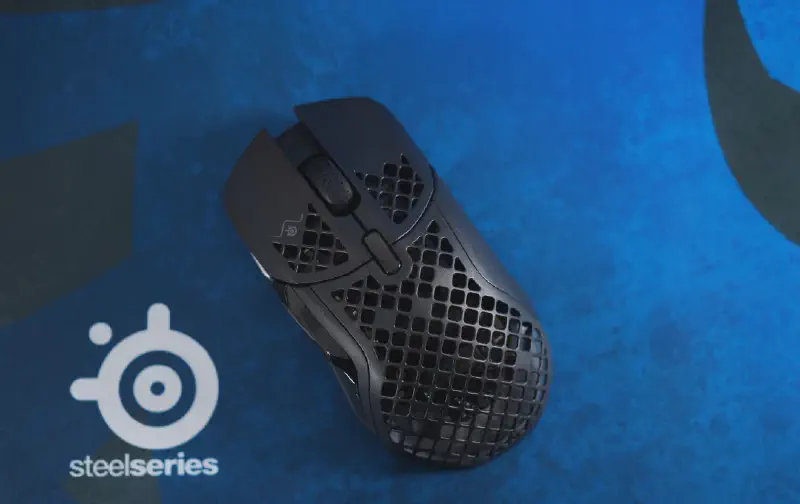
Wireless is a key feature of the Aerox 5 Wireless. Even in intense gaming, I didn’t notice any lag or frame drops, and the battery life was surprisingly long (I haven’t tested it myself, as the official figures suggest 180 hours of battery life, with a 10% drop in power over two days). The ability to quickly charge for 15 minutes and enjoy 40 hours of gameplay is also a plus. The only downside is that the mouse takes a second or two to activate after sleeping.
The SteelSeries TrueMove Air engine, customized by PixArt, features 1:1 tracking, up to 18,000 DPI, 400 IPS, and 40G acceleration. Although it’s not top-tier, it can easily handle mainstream esports games.
has 5 default speeds of 400~3200, and the maximum speed that can be set in the driver is 18000DPI.
Overall, the SteelSeries Aerox 5 Wireless is a pleasure to play with. It combines wireless fast charging and lightweight features, and is not a simple and rough stitching. If the weight and size of the mouse can be further optimized, such as releasing a model suitable for players with small hands, it will be more competitive.
6. ASUS ROG Spatha X - A redesigned flagship that controls everything #
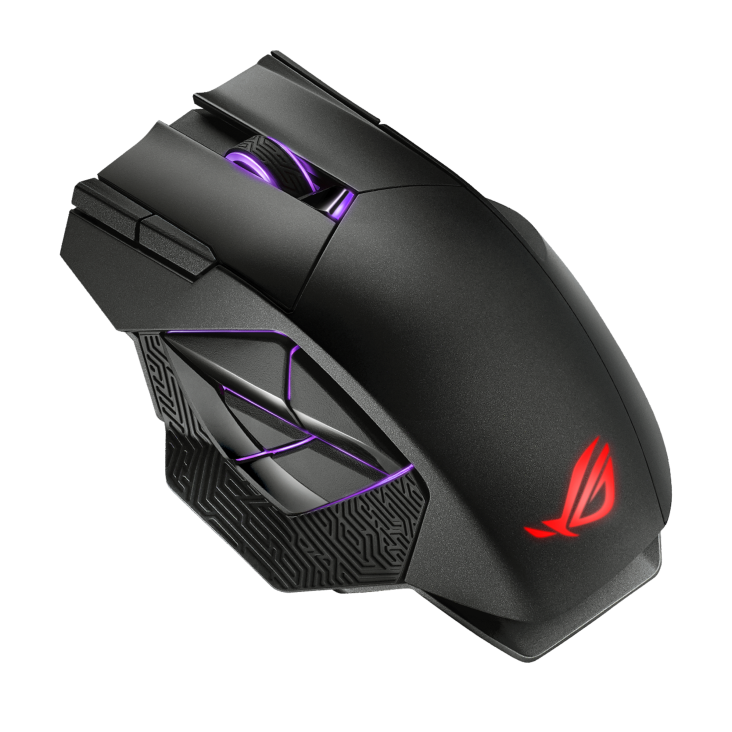
Recommended: The Spatha X is a stylish and comprehensive wireless mouse. It offers 12 programmable buttons and supports both wired and wireless connectivity. Its unique interchangeable switches allow gamers to customize the feel to their liking. Despite its hefty weight, its stability and extensive customization capabilities make it a reliable command center for strategy gaming desktops.
Suitable for gamers: Strategy gamers who prefer a large, heavy mouse with rich features and a high level of DIY fun.
For the most hardcore gaming enthusiast, a mouse that delivers precise, effortless control on the battlefield is essential. The ROG Spartan X Wireless Gaming Mouse is the perfect choice. Its exceptional performance and unique design provide an exceptional gaming experience.
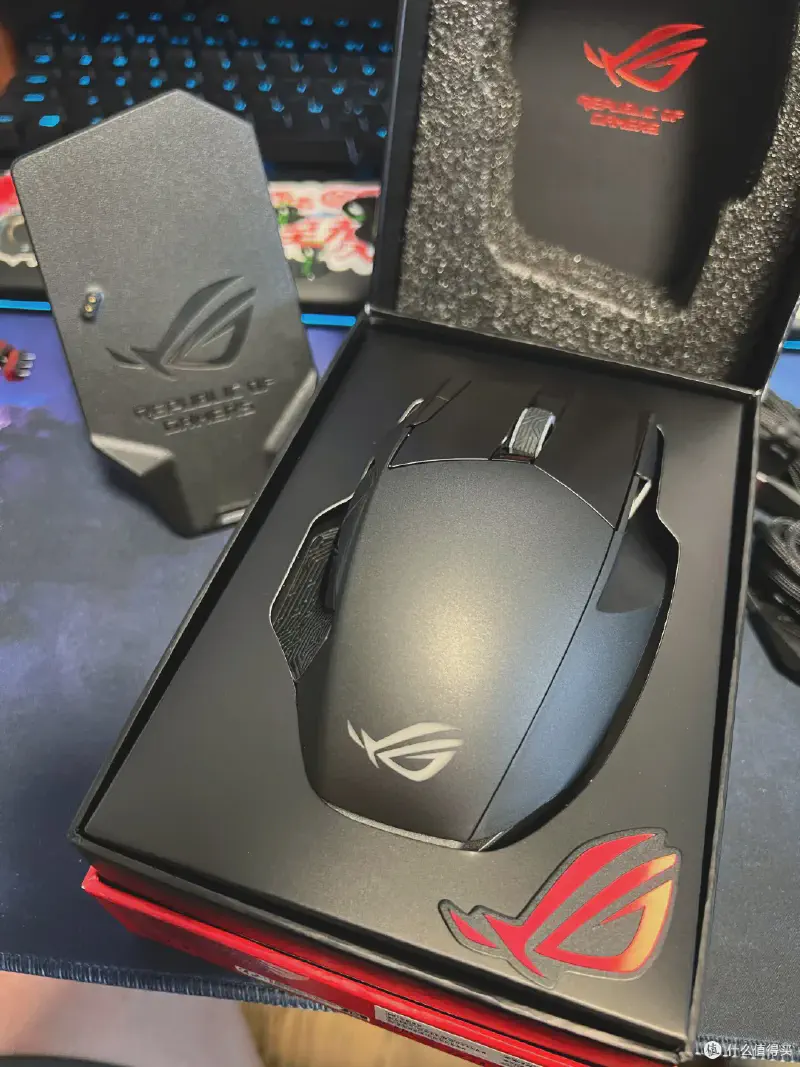
The design, rich button layout, and multi-zone RGB clearly indicate a departure from current mainstream lightweight designs. At 127.2g, it feels quite heavy, and the large size and weight are a delight for even the most advanced. However, the new Magic Blade X features a more flexible paracord cable (compared to the Magic Blade’s braided cable), which reduces cable restraint when used in wired mode.
Lightweight aside, the ROG Blade X’s design is even more radical, unreserved, and packed with features. The number of customizable buttons has been further increased, with a joystick and four side buttons on the left side, somewhat reminiscent of the staggered side button layout of the previous ROG Spartan. The four side buttons are distinguished by spacing and button covers of different sizes. The four side buttons also correspond to the ABXY action buttons on the controller, and the joystick has been adjusted and replacement parts are available, which will improve the control feel and can also be shielded to prevent accidental touches in other scenarios.
The overall design remains largely unchanged, with ergonomics for the right hand, a large thumb rest on the left, a raised rear end to prevent pinching, and split keypads with guide grooves. Given the device’s length, the scroll wheel has been appropriately positioned further back. There are three preset lighting zones: the front light strip, the scroll wheel, and the rear logo.
The tail cover is fixed with magnets, provides storage for the receiver, and supports custom illuminated logos. The back cover has a black transparent effect, so when it is put back on, the light has a hazy feeling. Not only that, the front cover is also a detachable structure, and it is also a black transparent panel. This structural solution is designed to make it easier for users to replace micro switches, unlike the previous replaceable micro switch solution that requires the entire shell to be removed. In this way, there is no need to use a screwdriver or damage the foot pads, which is simple and quick. With the provided tools, micro switches can be easily and non-destructively replaced. At the same time, compatibility is also better. Double click? Just change it.
In terms of details, the end of the key cover has a tension spring built into it to pre-press and eliminate empty key travel. Of course, the detachable structure has some inherent shortcomings, which makes it relatively easy to become loose, and there is a slight noise when clicking quickly.
In terms of performance, the Magic Blade X has been upgraded with an AimPoint 36K DPI optical sensor, 650IPS, and 50G acceleration. This sensor isn’t an interpolation of the original 3335 engine (the one in the Magic Blade), and boasts a resolution deviation of less than 1%. In the test software, the jitter discrete control is indeed very good, and the power consumption is also excellent. The performance parameters are firmly at the top level, and we look forward to the subsequent popularization and decentralization of this engine. In addition, it supports two-level silent height adjustment, approximately 1mm and 2mm. In 2.4G mode, it supports a 1000Hz polling rate and a 1ms response time, making wireless gaming completely trouble-free. When switching to a wired connection, the driver interface adds three more settings: 2000Hz, 4000Hz, and 8000Hz. 8000Hz is now the standard for high-performance gaming mice. However, please note that enabling this setting will consume CPU resources.
On the other hand, with so many lighting zones and full power, I only need to charge it every 3-4 days. Charging is convenient, though. Besides supporting fast charging (15 minutes of charging gives me 25 hours of battery life), it also comes with Qi wireless charging. The mouse itself uses a Type-C port, so you don’t need to worry about charging cables. The Magic Blade X does a really good job of charging.
The ROG Magic Blade X’s relatively conservative design makes it easy to get used to. Its advanced features cater to specific scenarios, particularly the multi-side button layout, making it a perfect fit for MMO games. Of course, after the latest upgrade, its performance is also top-notch. Other features include interchangeable switches, customizable logos, wireless charging, an 8kHz polling rate, and analog joysticks—all packed into one mouse, making it a unique proposition.
Cost-effective choice: a wise choice for entry-level and advanced users #
7. Razer Basilisk V3 – Flagship experience at a mid-range price #
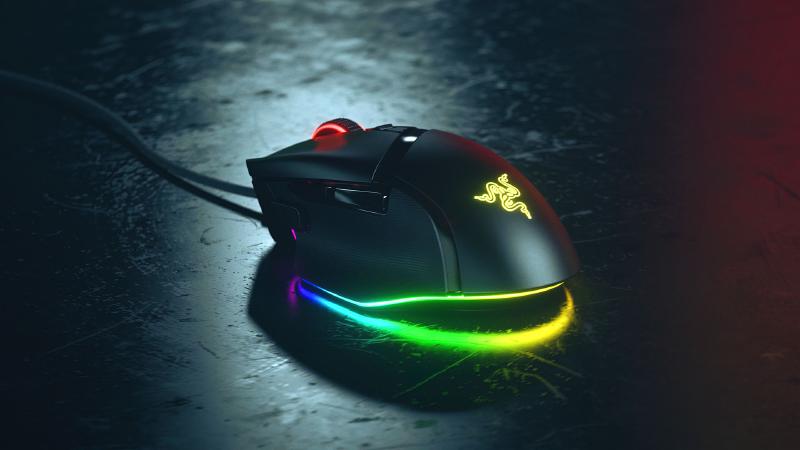
Recommended: The Basilisk V3 inherits many of the best features from the flagship model, including a comfortable ergonomic design, a smart scroll wheel, and multiple programmable buttons. It strikes a perfect balance between performance, features, and price, making it an ideal choice for most strategy gamers.
Suitable for gamers: Strategy game enthusiasts on a budget who desire a near-flagship experience.
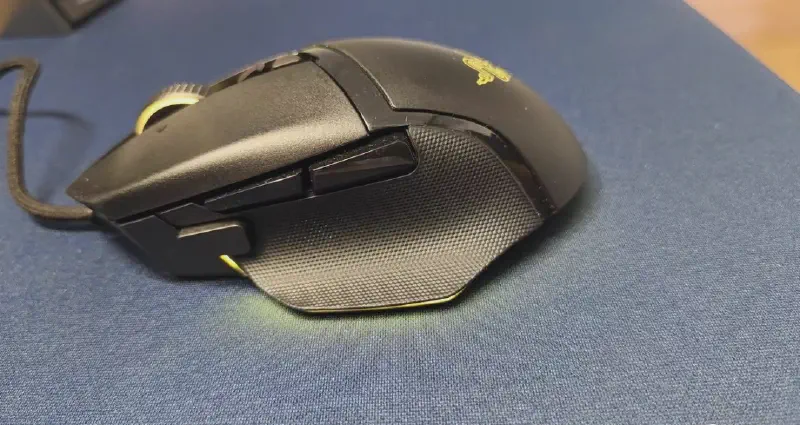
The Razer Basilisk V3 gaming mouse’s packaging maintains its usual minimalist, elegant black and green color scheme, and the manufacturer has also highlighted the mouse’s features for easier identification. The product image on the packaging reveals significant improvements to the mouse’s lighting, including an RGB light strip at the bottom, a scroll wheel, Razer’s second-generation optical switches, and a FOCUS+ optical sensor. Supporting up to 26,000 DPI, the mouse boasts impressive hardware.
The Razer Basilisk V3 gaming mouse adopts a typical right-handed ergonomic design with a higher left side and a lower right side, continuing the family’s design style. The body dimensions are: 130mm × 60mm × 43mm, which is medium to large, very suitable for the hand size of Chinese people. The body lines are rounded and natural, which is more suitable for users to use with a palm grip. The body shell is made of a matte texture material with a very delicate feel. The left and right side skirts are large areas of injection-molded rubber material, which not only ensures a comfortable grip but also has good sweat and anti-slip properties, making the grip more stable and less prone to slipping. The addition of mirror material to different areas of the body adds a sense of layering to the visual effect and further enhances the overall texture of this mouse.
The left side of the body adopts a relatively wide side wing design, which can provide sufficient support for the user’s thumb and make the grip more comfortable. The surface adopts a raised particle anti-slip texture to ensure the comfort and anti-slip feel. A multi-function button is provided on the top of the mouse. The position is moderate to avoid the occurrence of accidental touches in daily use. It is also convenient to press and trigger. However, this multi-function button does not continue the previous detachable and adjustable design, which makes the author feel a little regretful. The two side buttons are made of mirror material and the position design is reasonable. They are also very convenient to use. The rounded corners at the edges also bring a good feel.
The left and right main buttons utilize a split-button design, with internal Razer second-generation optical switches offering fast trigger response and exceptionally long lifespan, with a maximum lifespan of 70 million clicks. The buttons feel light and crisp, with a moderate key travel, quick response, and clear confirmation, resulting in very good overall performance. The left and right buttons also offer a fairly consistent feel, with no issues like wiggling or empty key travel. While the right button still has a slightly fleshy feel when pressed, it doesn’t affect daily use.
The scroll wheel offers a dual-mode vertical and horizontal scroll wheel with a graduated scale and a free scroll mode. The graduated scale has a moderate damping, making it more suitable for gaming. The free scroll mode has a lighter damping and no graduated scale, allowing for fast scrolling, making it very useful for everyday document reading and web browsing. When used with the ThunderCloud 3 driver software, it also enables intelligent scrolling, automatically switching to free scroll mode based on the user’s current scrolling speed, providing users with more convenient performance. The scroll wheel also supports left and right clicks for left and right scrolling, and users can also customize the functions of the two buttons in the driver software for a more convenient user experience.
The scroll wheel features a translucent body with a rubber anti-skid ring. The rubber ring has anti-skid bumps, which provide excellent anti-skid performance. Pressing or scrolling with your index finger allows for more precise operation. There are two buttons behind the scroll wheel. The button closest to the wheel is the scroll wheel mode switch, allowing users to change the scroll wheel’s operating mode at any time. Further back is the common DPI gear switch button, which allows for cycling through DPI gears, making it even more convenient to use.
The mouse’s bottom features four generously sized 100% PTFE feet, providing a smoother gliding experience and more agile control on a variety of surfaces. A profile switch button and indicator light are also provided on the bottom of the mouse, allowing users to easily switch between profiles stored in the onboard memory based on different usage scenarios, making it even easier and more convenient to use. Furthermore, a wraparound light strip has been added to the bottom of the mouse, creating a more striking lighting atmosphere for the user’s desktop.
The Razer Basilisk V3 gaming mouse weighs approximately 103g, which is acceptable considering its size. Its excellent right-handed ergonomic design also provides a more comfortable grip. When holding it in a prone position, the weight of just over 100g doesn’t feel noticeably heavy, and the grip feels full and comfortable. The high-quality PTFE feet on the bottom also provide a smoother glide, making the mouse easier to control.
This mouse is equipped with Razer’s latest Focus+ 26K optical sensor, boasting a native maximum DPI of 26,000, support for 650 IPS and 50G acceleration, and 99.6% accuracy. This powerful sensor delivers precise positioning and tracking, with excellent jitter control and straight line correction, making it easily suitable for both daily entertainment and competitive gaming, with more than adequate performance. With a peak DPI of 26,000, it can easily handle 4K and even 8K screens, ensuring undeniable overall performance.
The Basilisk V3 gaming mouse delivers exceptional positioning and faithfully reproduces hand movements. Whether controlling the gun, firing bursts, or turning quickly, it’s incredibly stable, delivering exceptional control. The high-performance Focus+ 26K optical sensor delivers responsive movement, allowing for smooth, jitter-free viewing angles and quick shifts, while also delivering excellent positioning and positioning, providing an exceptional user experience. The split buttons, coupled with second-generation optical switches, provide a crisp, clicky click, and the clearly demarcated scroll wheel ensures exceptional accuracy when switching between weapons, making it even easier and more convenient to use.
8. Logitech G305 Lightspeed - The best wireless entry-level choice #

Recommended: The G305 has become a hit in the wireless gaming mouse market thanks to its excellent value and reliable LIGHTSPEED wireless technology. Despite its minimalist design, its HERO sensor delivers stable performance and long-lasting battery life. It’s a highly affordable and reliable choice for players of strategy games (such as the Civilization series) who don’t require a large number of buttons.
Suitable for gamers: Entry-level and casual strategy gamers who seek wireless freedom and don’t require a high button count.
The G305 LIGHTSPEED is a wireless gaming mouse housed in a sturdy plastic case . It connects via a USB receiver and runs on a single AA battery . Its symmetrical, egg-shaped design features a pair of side buttons on the left side and a button behind the scroll wheel that acts as a default CPI button. The mouse is a bit small and may not be ideal for those with larger hands, but it feels as well-made and high-quality as some of Logitech’s higher-end mice. In terms of performance, it offers impressively low click latency and a very low minimum lift-off distance. You can also adjust the CPI in precise increments over a wide range.
While the Logitech G305 is designed as a gaming mouse, it’s well-suited for office use. It feels very solid and sturdy, but a bit heavy for its size. It has two side buttons, all of which are programmable using custom software compatible with Windows and macOS. However, those with larger hands may find it more comfortable, depending on the grip type. Additionally, the scroll wheel lacks left/right tilt buttons and a free-scroll function.
9. Corsair Harpoon RGB Wireless - Flexible, compact, and great value #
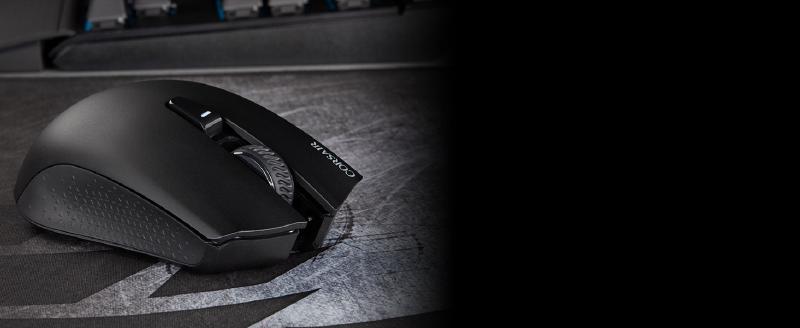
Recommended: This mouse is compact and lightweight, offering a flexible grip, making it ideal for both claw-grip and finger-grip gamers. It supports both 2.4GHz wireless and Bluetooth connectivity, offering a wide range of use cases. While it lacks buttons, its reliable performance and affordable price make it an excellent entry-level wireless strategy gaming mouse.
Suitable for gamers: Strategy gamers with smaller hands or those who prefer a lightweight mouse.
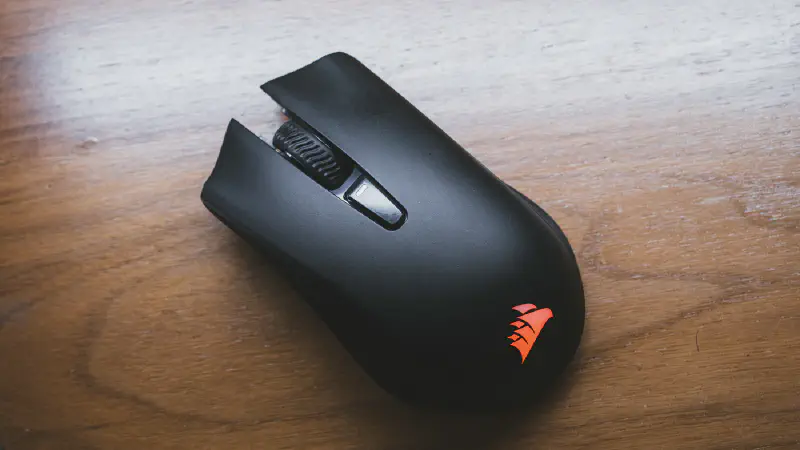
The feel is actually pretty good, and I can hold it comfortably even though I have large hands. Of course, it will take some time to get used to it in actual use.
On the other hand, this mouse is very light, less than 100g.
One of the Harpoon’s selling points is its triple connectivity: Bluetooth, wired, and 2.4G. The 2.4G connection uses a technology called Slipstream, which supposedly reduces latency to under 1ms. Compared to a wired connection, I couldn’t really tell the difference. The wired connector is surprisingly tight, which reassures me.
As for battery life? The official website says about 30 hours with backlight at 2.4G? With the backlight off, it gets 60 hours, which isn’t a particularly impressive result, roughly equivalent to charging once a week. I personally wouldn’t mind the extra 10g for double the battery life, but perhaps this is just a reasonable value given the current size. The battery level seems difficult to find; you have to go to the driver settings, not the first page, and there are only High, Medium, and Low settings. I still think a percentage, even in 10% increments, would be more reasonable.
10. SteelSeries Rival 3 - A solid and reliable wired entry-level model #

Recommended: If you’re on a very limited budget, the Rival 3 is a wired mouse you can’t miss. It boasts a sturdy build, a reliable sensor, and a comfortable, symmetrical design. While its features are basic, they’re sufficient for most strategy games, making it an excellent choice for beginners or as a backup mouse.
Suitable for gamers: Entry-level gamers and internet cafe users on a very limited budget.
SteelSeries claims a 1.9ms click latency and true 1-to-1 tracking thanks to its TrueMove Air optical sensor (18K DPI), developed in collaboration with PixArt. With up to 18,000 DPI, 400 IPS, and a maximum acceleration of 40g, the Rival 3 Wireless Gen 2 delivers stable, accurate performance despite not aligning with the industry trend of 8K polling. Its 1,000Hz polling rate is more than enough for most gamers, with the exception of those focused on competitive gaming with 8K support at high polling rates. Furthermore, the Rival 3 Wireless Gen 2 isn’t targeted at competitive gamers, which is why the company didn’t try to reduce the weight of the mouse as much as possible.
Speaking of battery life, the single AAA battery showed 90% charge when inserted on June 2nd, but after a week of moderate use, a combination of 2.4GHz and Bluetooth usage had dropped to 61%. This usage included playing PUBG , Delta Force , and Deathloop , as well as working on a Mac via Bluetooth. The Rival 3 Wireless Gen 2 may not reach the 200 hours and 450 hours of battery life (on 2.4GHz and Bluetooth, respectively), but it’s still more than enough power for frequent and extended gaming sessions.
Summarize #
When choosing a strategy gaming mouse, prioritize your gaming style, personal grip, and budget. For RTS and MMO players who demand complex controls, a mouse with multiple programmable side buttons (like the Razer Naga V2 Pro) is a top choice. For 4X and turn-based strategy players who prioritize macro management, a comfortable, precise mouse (like the Razer DeathAdder V4 Pro or Logitech G502 X Plus) is crucial. We hope this list helps you find your ideal gear and achieve unparalleled success on the strategic battlefield.